Making Futures 2024 2

Research & Innovation

Rooted in the materials, resources and stories of the South West of England, the Centre for Circular Materials brings circular thinking into the earliest stages of making, where material choices shape both creative outcomes and impact. It connects research, teaching and partnerships through a shared focus on bioregional and responsible materiality.

Bioyarn samples created by Natalia Lombardi at Arts University Plymouth

Biomaterial sequins created by Natalia Lombardi at Arts University Plymouth

<p dir="ltr">Founded in 1856 as the Plymouth Drawing School, Arts University Plymouth has 170 years of practice-led teaching and skilled making rooted in the South West. From regenerative dye grown in Plymouth to experiments with locally sourced clay and prototypes that rethink regional waste streams, Arts University Plymouth has been building a distinctive, place-based trajectory in circular materials <strong>since 2009</strong>.</p> <p dir="ltr">The <strong>Centre for Circular Materials</strong> is built on two established Arts University Plymouth platforms. <a href="https://www.aup.ac.uk/research/supported-projects/making-futures">Making Futures™</a> has, since 2009, convened international research and debate around materially led practice, making and sustainability. Founded in 2014 and reaffirmed as a regional hub, <a href="https://www.aup.ac.uk/resources/fab-lab">Fab Lab South West</a> provides the tools, expertise and partnership routes to translate that enquiry into prototypes, trials and Knowledge Exchange.</p> <p>The Centre for Circular Materials gives a unified home to work already underway across the University. It enables Arts University Plymouth to <strong>articulate that research more explicitly across teaching, creative practice, partnerships and prototyping</strong>, strengthening the university’s role at the intersection of material practice, responsible making and advanced prototyping. It places particular emphasis on <strong>bioregional and responsible materiality</strong>: how materials shape the life and culture of places, learning from what can be sourced, grown and remade in the South West, and from the skills, industries and supply chains that shape how materials move through the region, and how those decisions shape creative outcomes.</p>
Researchers prototyping circular materials in Fab Lab South West at Arts University Plymouth.

Natalia Lombardi leading a natural materials workshop in the Biomaterials Lab at Arts University Plymouth.
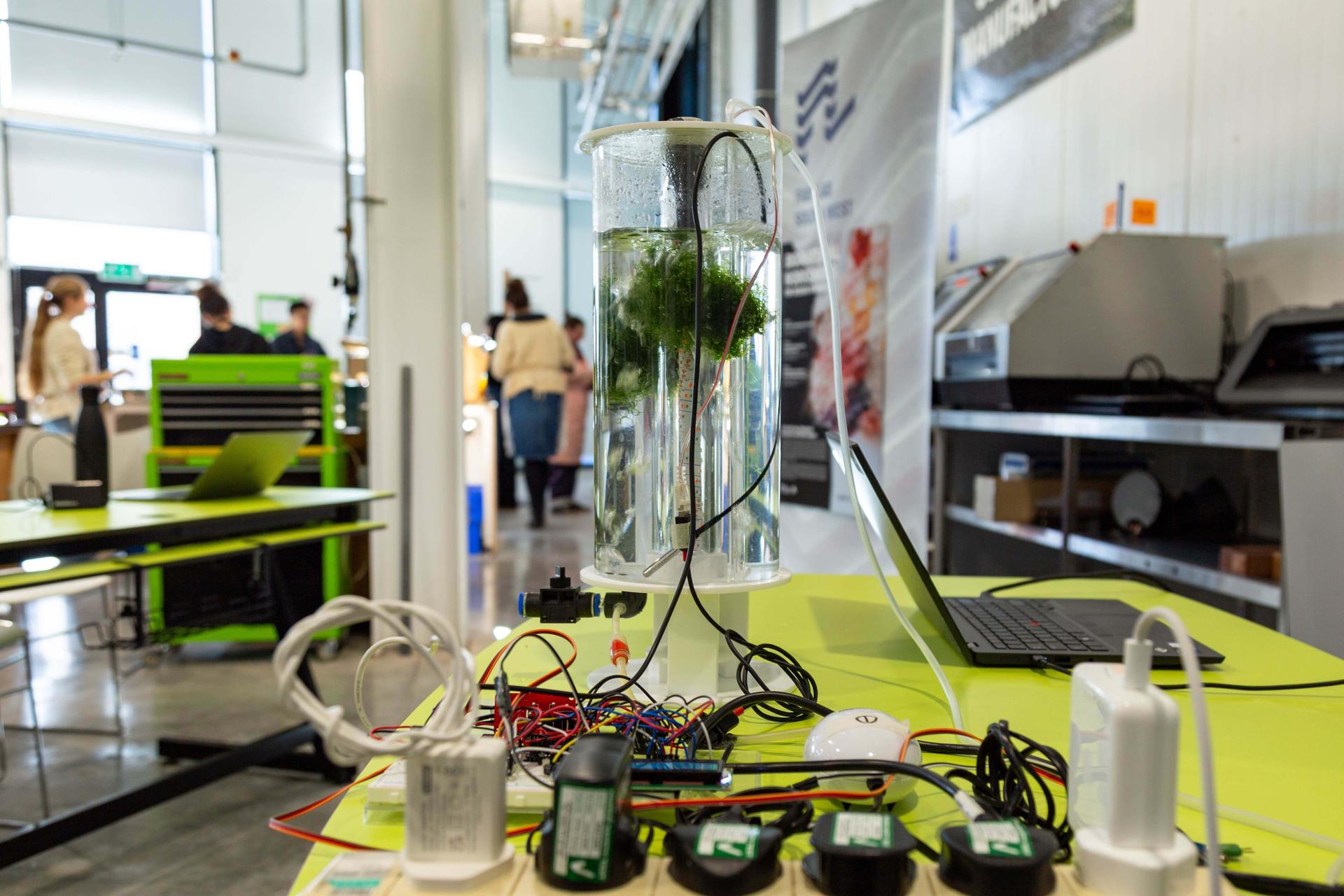
<p dir="ltr">The Centre for Circular Materials brings circular thinking into the earliest stages of making, where material choices shape both creative outcomes and impact. It supports the investigation of new materials and aesthetic and formal innovation through sustainable, regenerative and reclaimed or secondary materials, alongside place-based materials use as a commitment to low-carbon creative practice. From the outset, it also embeds design and prototyping decisions that improve longevity, enable repair and reuse, and help keep value in circulation.</p> <p dir="ltr">Working cross-university, the Centre for Circular Materials connects academic work with learning, operations and external partnerships. It provides a common framework that can shape projects and decision-making, from material choices and prototyping methods to purchasing, reuse and responsible disposal.<br /></p>
Biomaterials live algae workshop in Fab Lab South West at Arts University Plymouth

Biomaterials live algae workshop in Fab Lab South West at Arts University Plymouth, led by Visiting Researcher Yan Feng.

<p dir="ltr">Arts University Plymouth’s Centre for Circular Materials will bring together artists, designers, researchers, students and partners to develop practical, materials-led approaches to circular design and innovation. Activity will span experimentation through to applied research and Knowledge Exchange, including:</p><ul><li dir="ltr"><p dir="ltr"><strong>Embedding circular questions </strong>at the start of creative development to reduce material loss and avoid unnecessary extraction</p></li><li dir="ltr"><p dir="ltr"><strong>Developing bioregional material research</strong> and a place-based materials library, connecting local resources, skills and industrial assets in the South West to low-impact applications, prototypes and teaching</p></li><li dir="ltr"><p dir="ltr"><strong>Advancing focused themes such as regenerative textiles and digital clay</strong>, supporting forms of making that extend lifecycles and enable reuse, repair and reprocessing</p></li><li dir="ltr"><p dir="ltr"><strong>Growing Knowledge Exchange </strong>with creative and industrial partners, translating academic enquiry into practical trials and shared learning that supports adoption in the real world</p></li></ul>
Natural dye biomaterial samples at Arts University Plymouth

Natural dye samples by Visiting Researcher Yan Feng at Arts University Plymouth.

<p>The Centre for Circular Materials consolidates and strengthens a body of work Arts University Plymouth has built through research, teaching and partnerships, showing how circular approaches become more persuasive when they are grounded in place, material knowledge and practical application.</p>
Natural dyes created at Arts University Plymouth

Natural dyes created at Arts University Plymouth.

<p>Researchers and students specialising in textile design have created a plant-based dye garden through <em><a href="https://www.aup.ac.uk/posts/plymouth-textile-experts-launch-sustainable-dye-garden">Of the Ground</a></em>, developed in collaboration with National Trust Saltram and sited at Plymouth’s Poole Farm. Supported through Knowledge Exchange funding, the project advances non-toxic, regenerative approaches to colour and shows how circular textiles can begin with local growing and lower-impact material choices.</p>
<p>Arts University Plymouth's Material Futures <a href="https://www.aup.ac.uk/research/research-groups">Research Group</a> has been identifying South West-based material histories and gathering a physical profile of the peninsular coastal region, to facilitate place-informed creative practice and materials research. This includes exploring how locally resourced clay, soil and other coastal plants and minerals form a regional material 'signature' library, strengthening the university's capacity to offer a centre of regional material knowledge and a culture of material-led prototyping.</p>
<p>Working with Agrikinetics, Arts University Plymouth’s Fab Lab South West tested whether miscanthus grass (elephant grass) pulp could provide a chemical-free alternative to imported paper and card in packaging. Proof-of-concept cartons and prototype moulds demonstrated feasibility and supported a route to scaling local production.</p>
<p dir="ltr">In collaboration with <a href="https://www.aup.ac.uk/posts/innovative-brewery-collaborates-with-plymouth-college-of-art-team-to-capture-and-reuse-co2">Barnaby’s Brewhouse</a>, Fab Lab South West prototyped a system to capture and reuse CO₂ released during fermentation, reducing reliance on externally sourced gas and demonstrating how circular design can be applied to regional food-and-drink production.</p> <p>The Centre for Circular Materials also builds on Arts University Plymouth’s wider record of materials-led enquiry that connects craft knowledge, constraint and process. This includes work such as <em><a href="https://www.aup.ac.uk/posts/another-crossing-on-remembrance-myths">Another Crossing</a></em>, a transatlantic collaboration with The Box, Plymouth, and the Fuller Craft Museum in Massachusetts, that challenged artists to create new work using only the tools, materials and processes available in 1620, foregrounding deep material understanding and historical making techniques in contemporary practice.</p>
Alginate leather sample created at Arts University Plymouth

Alginate leather sample created in the Biomaterials Lab at Arts University Plymouth.

<p>Making Futures™ provides the Centre for Circular Material’s research and convening platform, bringing together artists, designers, makers and researchers to explore how material cultures, craft and emerging technologies can respond to social and environmental change. Fab Lab South West extends this work through digital fabrication and applied prototyping, providing tools and expertise that support innovation and problem-solving with external partners, communities and students.</p>
Materials researchers at Making Futures 2024

Materials researchers at Making Futures™ 2024

<p>To explore partnership opportunities with Arts University Plymouth, visit <a href="https://www.aup.ac.uk/industry-collaboration"><strong>Industry collaboration</strong>.</a> <br /></p> <p>For routes into making, prototyping and testing ideas, explore <a href="https://www.aup.ac.uk/research/supported-projects/fab-lab-south-west"><strong>Fab Lab South West</strong>.</a> <br /></p> <p>To connect with the research platform underpinning this work, discover <a href="https://www.aup.ac.uk/research/supported-projects/making-futures"><strong>Making Futures™</strong>.</a></p>